








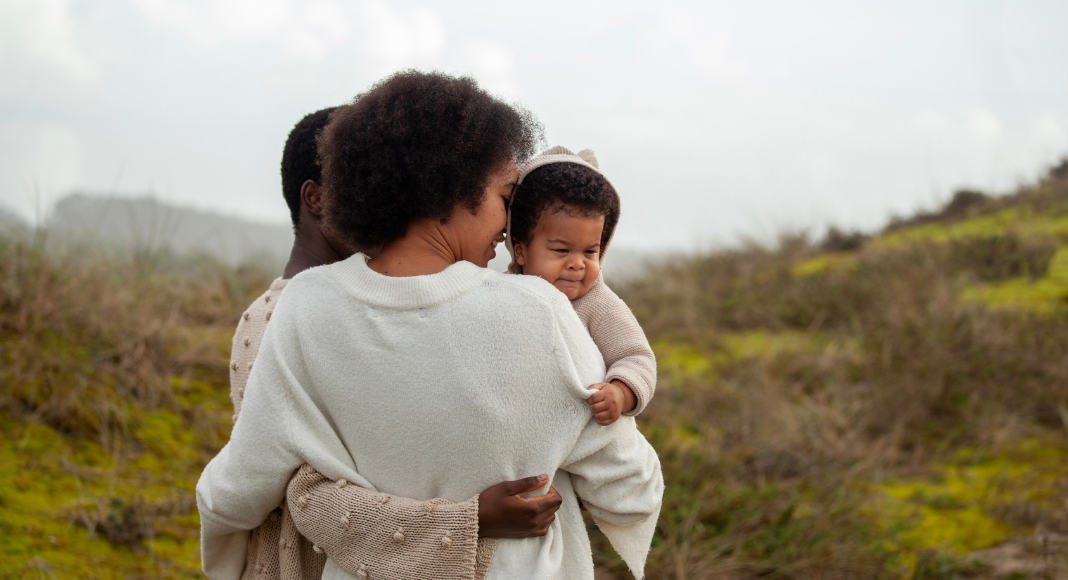
With Mother’s Day approaching this Sunday, I wanted to share a perspective that reflects a truth we don’t always pause to acknowledge: not all mothers are married, partnered, or supported in the ways we traditionally imagine. Motherhood exists in many forms, and each one carries its own complexities, sacrifices, and strengths.
This essay, written by my sister, speaks to the experience of navigating motherhood after the end of a long marriage, of learning how to parent, heal, and redefine yourself as a single Mom while still holding space for your child and your own growth. It is not a story of failure or loss, but of resilience, evolution, and quiet courage.
On a day meant to honor mothers everywhere, I hope that these words resonate with anyone who has had to rebuild, adapt, or stand strong in ways they never expected. This is for the moms finding their footing in new terrain, and for anyone who needs the reminder that there is no single way to be a mother, only your way.

There’s an odd sort of quiet that becomes part of a home after a long marriage ends. It’s
not just the absence of another adult; it’s the absence of a shared rhythm, a familiar
presence, and most importantly, the person you were for two decades. After twenty
years, separation doesn’t feel like starting over; more than anything, it feels like learning
how to exist in a completely new environment, while carrying the weight of the old one.
And when you’re a mother, that shift becomes even more complex to navigate and
understand.
The shift begins when you have to understand that it’s not just about your healing, it’s
about guiding your child through it, too. This is a new road to travel, a new way to be,
and finding calm in the new chaos of life.
One of the biggest hurdles to navigate is the shared parenting schedule. No one
prepares you for what it feels like to not have your child in your home every night. The
silence on those evenings can feel louder than any noise ever did. You will find yourself
wandering into their room, instinctively listening for sounds of them even when you know they aren’t there. The absence can hurt, ache, and grieve you in a way that’s both
physical and emotional.
But over time, that space will soften and become something else.
It can become a place for rebuilding, healing, and learning a different version of who
you are.
Co-parenting, especially after a long marriage, is a practice of patience, emotional
restraint, but above all else, growth. It requires redefining your relationship with someone
who once shared every inch of your life without hesitation or complaint. Now, your
connection has one focus: your child. What you believe is unfair, unreal, unwanted at
first, becomes a natural part of your new relationship. Conversations may be strained.
Emotions may still be raw. But learning to communicate with clarity and respect, even
when it’s the last thing you want to do, is one of the greatest gifts you can give your
child… and yourself.
And, then, there’s you.
For years, your identity was deeply tied to being a wife and a mother within one
common home. When that structure changes, it can leave behind questions that feel
both unsettling and liberating: Who am I now? Why am I not enough? What changes do I make now? Do I really feel free?
Healing doesn’t happen all at once. It comes slowly, often in waves of emotions, quiet
moments alone, reading a book, or even thinking of the good times you once had
together as a family. It can only show up when you start making decisions based on
what you need, not just what others expect. It grows when you rediscover interests you
set aside, or when you realize you’re stronger than you ever gave yourself credit for.
When you realize you are enough… more than enough.
That doesn’t mean it’s easy.
There will be guilt. There will be moments of doubt. There will be days when you
question if you’re doing any of it right. But healing isn’t about perfection; it’s about
navigating a new way of thinking, living, even breathing. It’s about being there for
yourself and your child in all the ways that you can, and that makes sense for you and
them.
This part of life most assuredly isn’t one you planned. But it holds something
powerful: the opportunity to model resilience, growth, and self-respect for your child.
At the end of the day, you are not just creating a beginning, a new way of life. You’re redefining it.